Moulting Season Care: Feeding and Perch Tips for Summer
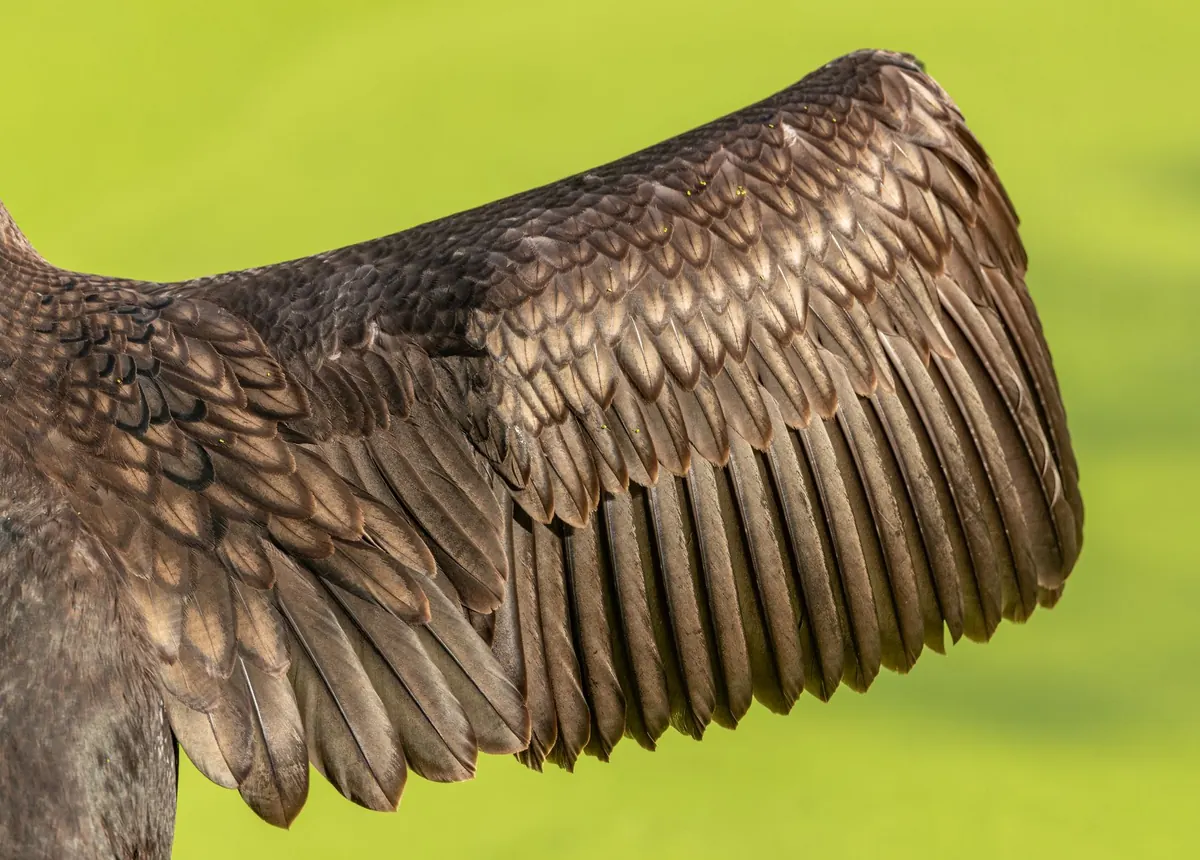
It often starts with a single primary on the lawn. Then a tail feather, neat and hollow-shafted, lying where your bird was perched an hour earlier. By midsummer the moult is well under way, and for the next few weeks your bird is quietly rebuilding almost an entire set of feathers. That costs energy, protein and water, and it changes how comfortable your bird feels on its perch and in the heat of the day.
Treat the moult as a working season rather than a rest period. Diet, bathing access and perch comfort are the three things you can control, and all three show up in the quality of the plumage your bird carries into the autumn.
How the Moult Actually Works
Most birds of prey drop and replace feathers in a set order, one or two at a time on each side, so the wing stays balanced and the bird can still fly. Longer days trigger the process; warm weather speeds it along. A growing feather is a blood-filled quill, which is why a knocked or bent blood feather can bleed heavily and why tail and wing tips need protecting during the summer.
Your bird may be quieter than usual. Some individuals go off their food for a day or two, others become noticeably hungrier. Expect a slightly heavier, lazier bird during peak moult — and expect moult timing to vary. It is rarely a neat, uniform process.
Feeding Through the Moult
Feathers are almost pure protein, so the moult raises demand for good-quality food. The aim is a varied, whole-prey diet rather than a single staple.
What to feed
- Whole prey where possible: quail, rat, mouse, rabbit, chick. Fur, bone and gut content give a more complete meal than skinned or gutted meat.
- Day-old chicks are useful and convenient, but they are fatty and low in calcium. Use them as part of a rotation, not as the entire menu.
- Heart and liver in small amounts make excellent tidbits and are easy to use for weight control.
- Fresh water at all times, in a clean bowl, changed at least once a day.
How much, and when
Weigh your bird each morning before feeding and write it down. A slight rise through the moult is normal and usually harmless; a steady climb that leaves the bird sluggish on the fist is not. Feed slightly larger rations than in the hunting season, but keep the routine steady so weight stays predictable. In hot spells, feed in the cooler part of the evening rather than the middle of the afternoon.
If a bird loses weight, drops condition, or produces dull, brittle or ragged new feathers despite a good diet, get it looked at by a vet experienced with birds of prey. Supplements are sometimes suggested, but most are a poor substitute for proper whole prey.
Bathing and Water Access
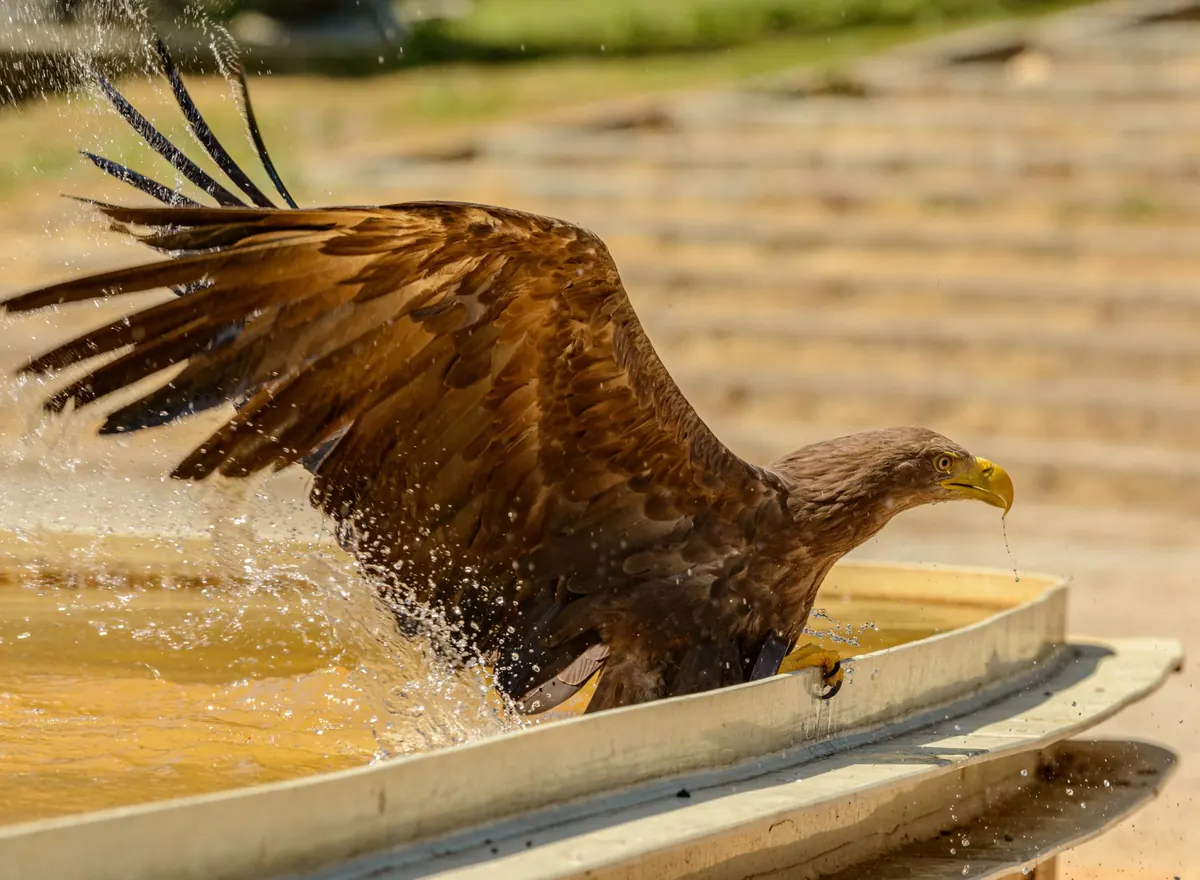
Bathing loosens old feather sheaths, eases itching and helps a bird keep its plumage clean and properly aligned. It is also one of the easiest forms of enrichment you can offer in summer.
Use a shallow tray — a cat litter tray or gravel tray works well — with two or three centimetres of water at most, placed in the shade and on a non-slip surface. Some birds hurl themselves in with enthusiasm; others prefer a fine mist from a plant sprayer, applied gently from above and slightly behind. Both are fine.
Timing matters. Offer water in the morning or early afternoon on a warm day so the bird has time to dry in the sun and air. Never leave a soaked bird in a cold draught, and avoid late-evening baths when the temperature drops. In the weathering area, keep the bath clean and refill daily — birds foul water quickly, and warm standing water is a health risk rather than a treat.
Perch Choice and Foot Comfort
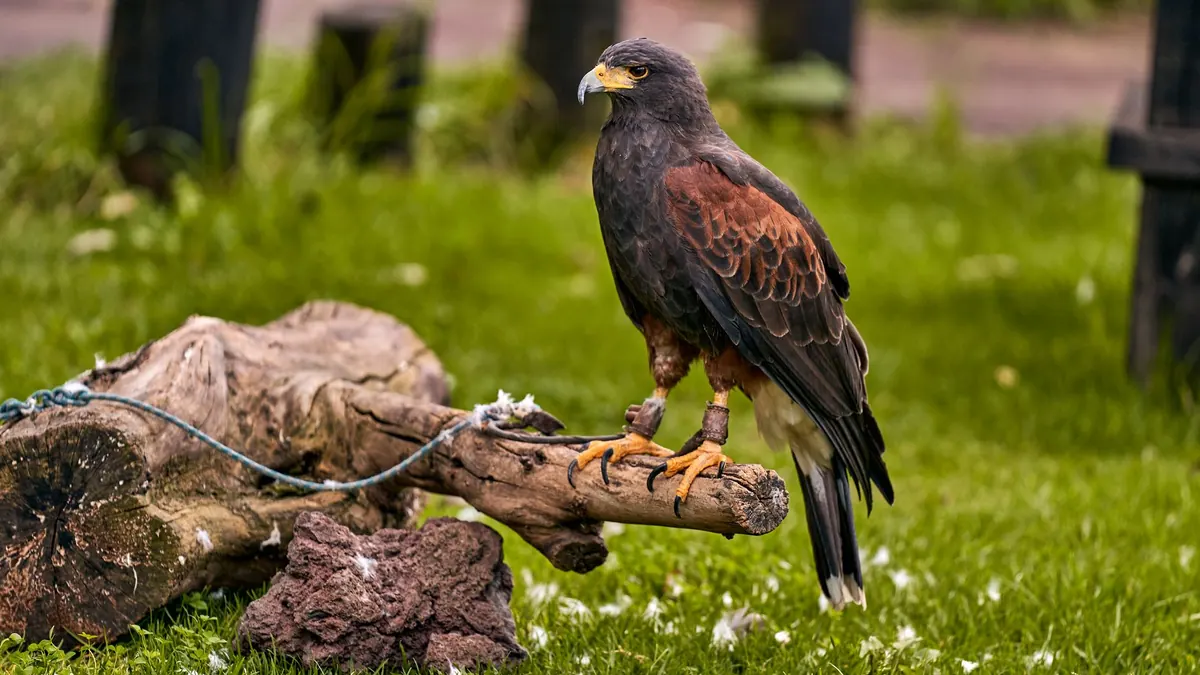
A bird stands for most of its life. During the moult, when it may be heavier and less active, the perch underneath it deserves more thought than usual.
Match the diameter to the bird's feet: the toes should wrap roughly two-thirds of the way around the perch, and the feet should not meet underneath. A perch that is too thin concentrates pressure on the soles; one that is too thick forces the bird to sit awkwardly and can encourage it to stand on its hocks.
Variety is the best protection. Swap between a natural branch with some texture, a bow perch and, for longwings, a well-padded block perch on a lawn or weathering shelf. Avoid perches that are polished smooth, and avoid anything so abrasive that it wears the soles. Check the covering on padded perches for splits and exposed staples, clean perches regularly, and make sure there is at least one perch in shade and one in the sun so your bird can choose.
Heat, Shade and Feather Protection
Summer heat and growing feathers are an awkward combination. Provide shade cloth, good ventilation and a choice of positions in the weathering area. In the hottest part of the day, move your bird to the coolest safe spot you have and leave handling for the early morning or evening.
Check leatherwork daily. Worn jesses, swollen anklets or a stiff swivel rub against legs that are already under strain, and a bird fussing at its feet is a bird likely to snap a tail feather. Where a blood feather breaks and bleeds, apply gentle pressure with clean gauze and contact a vet promptly — uncontrolled bleeding is not something to wait out.
A Simple Moult Routine
- Weigh before feeding each morning and record it.
- Check perches, jesses and anklets every day.
- Refresh drinking water twice daily; offer a bath on warm mornings.
- Rotate food across the week rather than repeating one item.
- Keep handling calm and brief, especially in the heat.
Looking Ahead to the Autumn
Patience now pays off later. Resist the urge to rush training while feathers are still coming through; short, gentle sessions and steady weight control will do more for your bird than any push for fitness in July. As the last tail feathers harden and the bird's weight settles, you can begin to build condition gradually, in cool hours, on ground you know well.
The moult ends quietly, much as it began. One morning you will notice the bird looks sleek again — no gaps, no ragged tips, no grey fluff in the corner of the weathering area. That is the result of a summer of small, unglamorous decisions about food, water and where a bird stands.
Photo: Petr Ganaj / Pexels
Falconry Gift Guide: Presents for the Falconer in Your Life
A practical falconry gift guide: useful presents at every budget, how to judge leather and metalwork, and...

Flying Weight Explained: Reading Your Bird's Condition Safely
How to find and hold a working bird's flying weight, score condition by hand, and build a daily weighing...
About Us