7 Common Mistakes When Tethering a Bird of Prey
Most tethering accidents don’t come from bad luck. They come from a handful of small, repeatable errors: a leash a few inches too long, a swivel that sticks, a knot tied to something that was never meant to hold a hawk. The bird pays for those errors with broken feathers, damaged legs or worse. The good news is that every mistake below is easy to fix once you know what to look for.
Mistake 1: Using the Wrong Leash Length
Walk around any weathering area and you’ll see leashes of every length, most of them chosen by eye rather than by purpose. The weathering leash and the flying leash do different jobs, and mixing them up is the single most common tethering error.
A flying leash is long enough to give a bird room in the field. Use one for tethering and the bird can build up momentum before it hits the end, which is how legs and feathers get broken. Anchor the same long leash too high and a bating bird can swing, twist and catch itself on the perch.
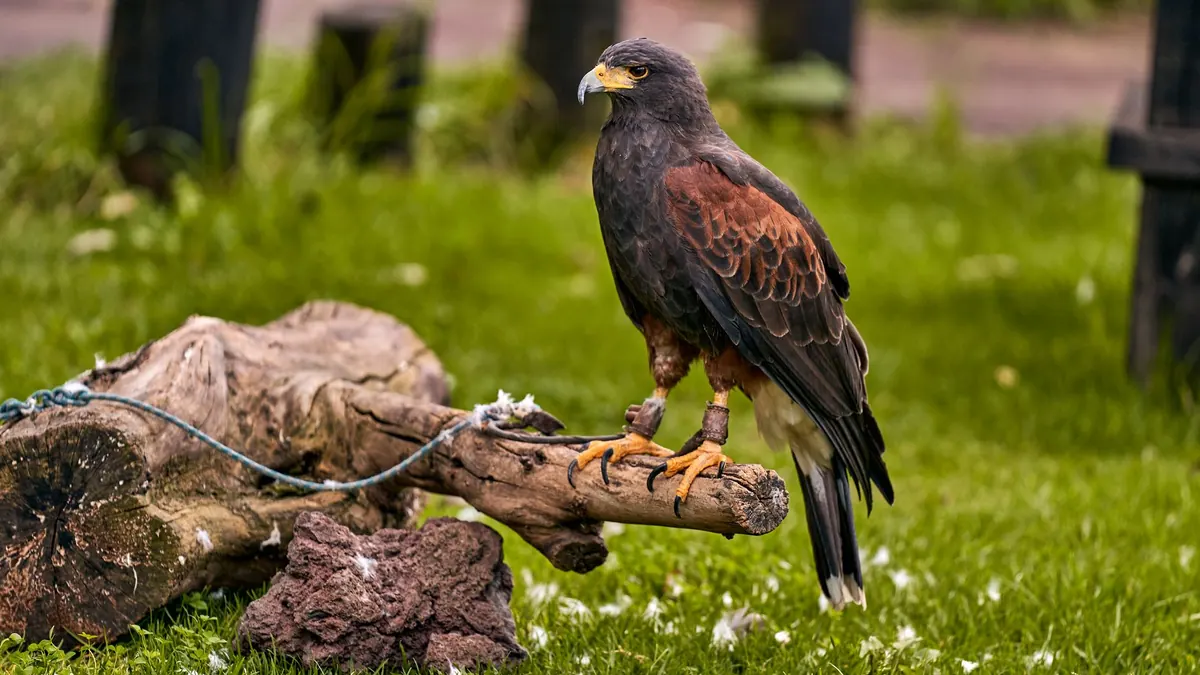
For tethering, a short leash is the safer choice. As a general rule it should be long enough for the bird to reach the ground, or the edge of its block, without swinging, and short enough that there is no spare slack to loop around the perch or the bird’s own legs. Set the perch, block and leash up together and watch how the bird moves before you walk away. If the leash can reach the ground when the bird bates, your anchor point is too high.
Mistake 2: Cheap, Single or Worn Swivels
A swivel is a small, cheap piece of kit doing a critical job. With only one swivel between the jesses and the leash, the bird’s own turning twists the leash into a tight cord. That stored twist releases the moment the bird bates, and the snap can injure a leg or a wing. Use a double swivel, or two swivels in line, so each one can rotate independently.
Quality matters as much as number. Cheap swivels are often stiff or roughly finished, and a swivel that binds is worse than useless because it gives a false sense of security. Check yours before every session: it should turn smoothly under a light pull. If it catches, grinds or shows rust, replace it. Keep spares in your kit box; they cost little and they fail without warning.
Mistake 3: Unsafe Anchor Points
Almost anything solid looks like an anchor point until a bird bates against it. Garden chairs, fence posts, railings and thin branches all move, flex or topple. So does a perch that is too light for the bird standing on it. A screw-in ground stake is only as good as the ground it goes into; in soft or sandy soil it will pull out under load.
Fit the anchor to the job:
- Anchor low, at or near ground level, so the bird cannot hang if it ends up over the edge of a perch or block.
- Use a purpose-made weathering perch or block with a properly fitted ring or anchor, set on firm, level ground.
- Keep the weathering area clear of anything the leash can wrap around: shrubs, guy ropes, cables, garden furniture.
- Never anchor to something above the bird’s feet unless the setup is designed for it and you are watching closely.
If you are ever unsure whether an injury needs veterinary attention, contact an avian vet rather than waiting to see how it goes.
Mistake 4: Jesses That Don’t Fit
Jesses that are too loose let a bird slip them, which usually means a hawk loose in the weathering area with a leash trailing. Jesses that are too tight chafe, restrict movement and can damage the leg over time. Either way, the tether stops doing its job.
Have the jesses fitted so the swivel moves freely but the bird cannot draw its leg out, and cut the slit so the jess holds the swivel securely rather than sliding through. Get into the habit of checking the leather before every session. Look for cracks, stretched slits and worn edges, and replace anything doubtful. A jess that fails in the wind is a bird on the wing.
Mistake 5: Tethering and Walking Away
A tethered bird is not a safe bird. It cannot escape a fox, a dog or a passing buzzard, and it cannot right itself if a jess slips over a perch end. New birds in particular need supervision while they learn to sit a perch and a swivel without bating.
Stay close for the first sessions and check frequently afterwards. Look for a slipped jess, a toe caught over a leash, a leash wrapped round the block, and any bird that is bating hard or panting. If you cannot supervise, use a secure weathering area or a safe indoor setup instead. When in doubt, bring the bird in.
Mistake 6: Skipping the Pre-Session Check
Two minutes of checking prevents most of the problems above. Before every tethering session, run through the same routine:
- Turn the swivel in your fingers and listen for grinding.
- Run the leash through your hands and look for fraying, especially near the knot.
- Check the jesses: fit, slits, leather condition.
- Test the anchor with a firm pull.
- Scan the ground for anything the leash can catch on.
- Check the perch or block is stable and the leash is not already wrapped.
Five minutes of maintenance a week, cleaning leather and replacing worn parts, keeps that check quick. Put a note on the calendar if you need one.
A Safer Routine
None of these mistakes are unusual, and none of them are difficult to correct. Set your tethering up around the bird rather than the other way round: a short leash, a double swivel, a low and solid anchor, jesses that fit, and eyes on the bird while it is out. Watch how your bird behaves on the perch, adjust the setup when something looks tight or slack, and replace worn kit before it fails rather than after. That routine is the whole art of tethering, and it takes less time than repairing the consequences of getting it wrong.
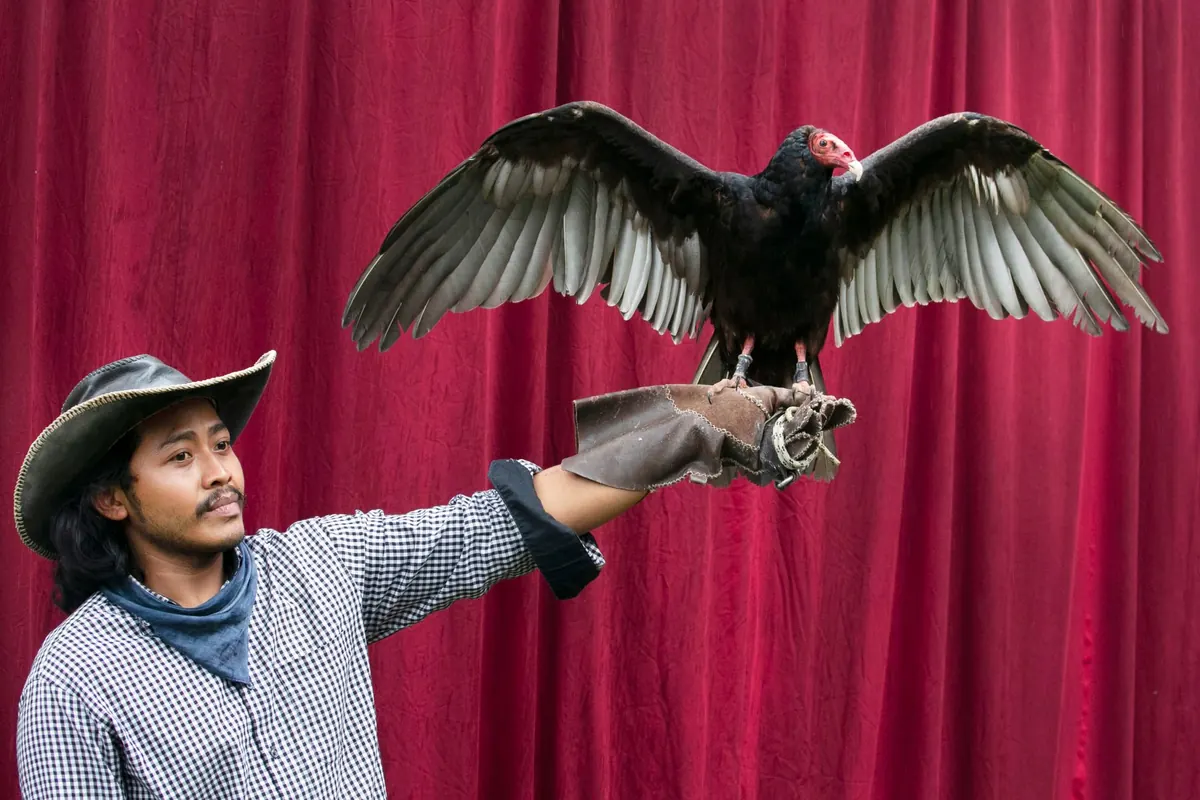
Photo: Willians Huerta / Pexels
Falconry Gift Guide: Presents for the Falconer in Your Life
A practical falconry gift guide: useful presents at every budget, how to judge leather and metalwork, and...

Flying Weight Explained: Reading Your Bird's Condition Safely
How to find and hold a working bird's flying weight, score condition by hand, and build a daily weighing...
About Us