Block Perch vs Bow Perch: Which Suits Your Bird?
Walk into most falconry kit rooms and you'll find both: a block perch in one corner, a bow perch on the wall. They do the same job — keeping a bird off the ground, comfortable and under control — but they ask different things of the bird standing on them. Get the pairing wrong and the first sign is rarely in the feathers. It's in the feet.
Two designs, one big difference
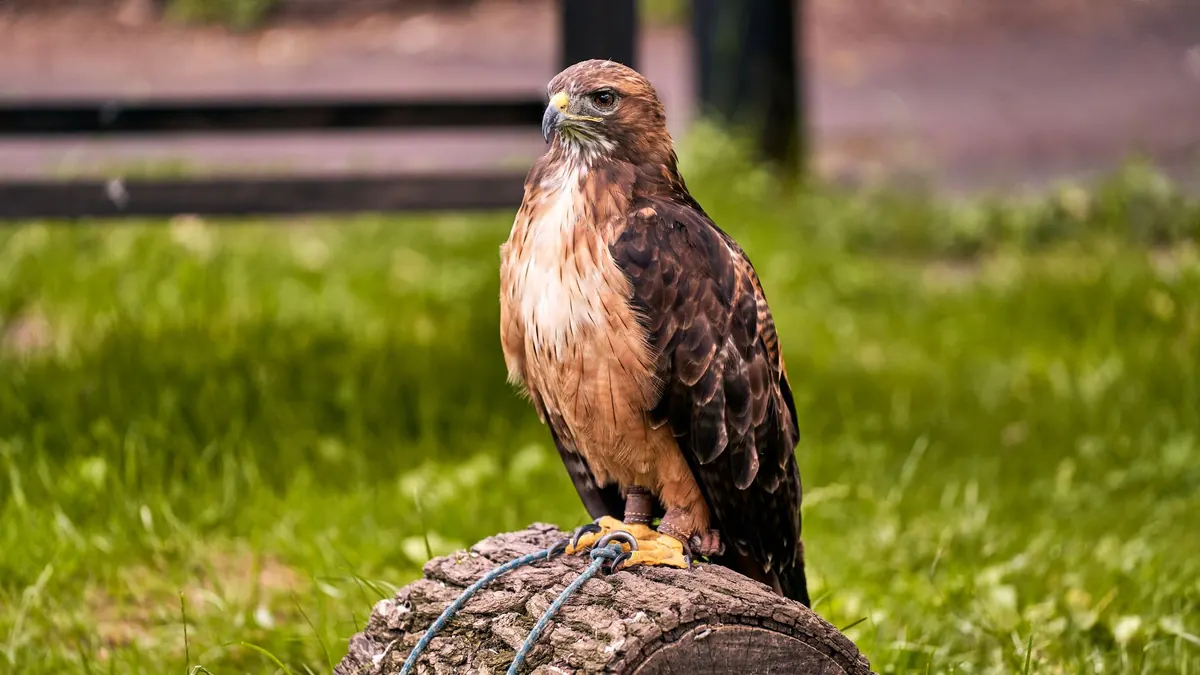
A block perch is a flat, solid top — a slab of timber, sometimes with a turf, leather or padded surface — fixed to a post, a ground spike or a weighted base. The bird stands level, the way it would on a rock ledge or open ground. Most have a ring or staple where the swivel and leash attach.
A bow perch is a curved hoop, traditionally metal and wrapped in cord or leather, mounted on a spike you push into the grass or on a freestanding frame. The bird grips the curve of the bow, the way it would a branch.
Flat versus gripping. That single difference drives everything else, from which species suits which perch to how often you'll be scrubbing them.
Species suitability
Falcons and other longwings
Longwings — peregrines, sakers, lanners, gyrfalcons and their hybrids — have feet built for standing, not gripping. In the wild they spend long periods on flat ground, cliff ledges and rock. A block perch gives them a level platform that spreads their weight evenly and keeps pressure off the soles, which matters because falcons are among the birds most prone to foot trouble when perched badly.
The top wants to be broad enough that the whole foot rests flat without the toes curling over the edge, and the perch should be tall enough that the tail clears the floor or ground by a comfortable margin.
Hawks, buzzards and other gripping birds
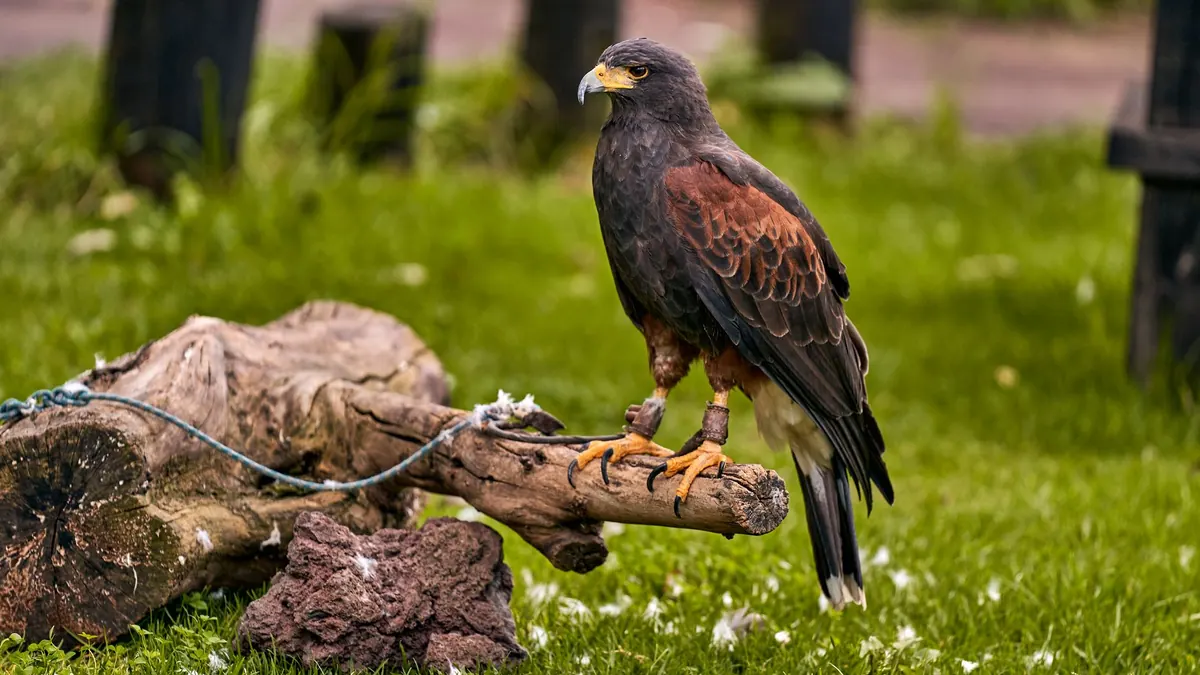
Goshawks, sparrowhawks, Harris' hawks and buzzards perch on branches, and their feet are designed to wrap and lock. A bow perch lets them do that naturally; the hoop also lets a bird adjust its grip as it shifts weight through the day.
Beware of a hoop that's too wide. If the toes don't reach around the curve, the bird ends up balancing on the flat of its feet, which defeats the purpose. Too narrow and the toes overlap, which is uncomfortable and can lead to sores. The bird should be able to grip the bow with toes wrapping underneath and just clearing each other.
Owls and the smaller species
Most owls settle well on a bow perch of the right diameter, and small species — kestrels, merlins, little owls — need the same design scaled down. A perch that was fine for a Harris' hawk is an unstable ledge for a bird a quarter of the size.
Watch the bird, not the label on the perch:
- Repeatedly lifting one foot, or rocking from side to side
- Sitting back on the hocks rather than standing upright
- Red, bare or shiny patches on the soles
- Reluctance to step up, or fidgeting that never settles
Any of those mean the perch is wrong, whatever the maker's description says.
Stability and footing
A perch that rocks is a perch that teaches a bird to bate. Weight and footprint matter more than looks. Block perches are usually heavy at the base, which suits a bird that shifts position often; a bow perch on a spike is rock steady in soft grass and unpredictable on hardstanding, where you'll want a weighted base or a frame instead.
Think about where the bird will actually sit. A block perch in a weathering area needs positioning so the bird can see around it and won't catch a wing on the shed wall when it bates. Outdoors, a bow perch on a spike should be well seated — a lean develops over a wet week and you won't notice until the bird is on it.
Check the tether point as well. The swivel should hang free, clear of the hoop or block, so the leash can't snag when the bird moves. Poor clearance is a common cause of tangles and of birds hanging up.
Portability
This is where the bow perch usually wins. A hoop on a spike weighs little, packs small enough for a vehicle and goes into the ground at the field in seconds. Falconers flying at different sites often carry one so the bird has somewhere to sit while they set up or wait for the weather.
Block perches are heavier and bulkier, and most stay at one station. That isn't a fault — a solid block perch in a weathering area is doing a different job from a travelling perch. If you want one perch for both, look for a block with a screw-in base or a bow perch with a removable spike, and accept the compromise.
Cleaning and wear
Mutes land on the perch, not just the floor, and every design collects dirt somewhere different.
Flat tops are easy to scrape and easy to inspect. Timber needs sanding back now and then, and turf or leather surfaces should be replaceable — if you can't get the top clean, you'll be buying a whole new perch rather than a new surface.
Bow perches hide grime in the wrap. Cord and leather hold moisture and mutes, and a frayed strand can rub a toe raw. Check the wrap regularly, replace it before it frays, and look for rust at the welds and the spike. Wash both types with a bird-safe disinfectant, rinse thoroughly and let them dry completely before the bird goes back on — a damp perch is a cold perch.
Keep a spare perch for each bird if you can. It's far easier to swap a drying perch for a clean one than to wait for a single perch to dry with a bird sitting in a travel box.
Choosing quickly
- Match the perch to the species' feet first, and to the bird's size second.
- Measure the hoop or the flat top against the bird's foot, not against a photograph.
- Put the perch where it will live and push against it. If it moves, fix that before the bird stands on it.
- Check that the swivel and leash hang clear of the frame.
- Ask how the surface is cleaned and replaced.
- Decide whether it stays in one place or travels, and buy accordingly.
Living with your choice
Most falconers end up owning both, and that's a sensible place to land. A block perch for the falcon, a bow perch for the hawk, a smaller bow for the merlin. If you're starting out with one bird, borrow a perch from a club member for a fortnight and watch how the bird settles on it before you buy.
Check feet weekly — soles, toes, the web between them. If you see redness, swelling, or a bird that won't put weight on a foot, change the perch and speak to an avian vet rather than waiting to see if it settles. Foot problems in captive birds rarely fix themselves, and they are much easier to sort out early.
The right perch is the one your bird stands on quietly. Everything else is a detail.
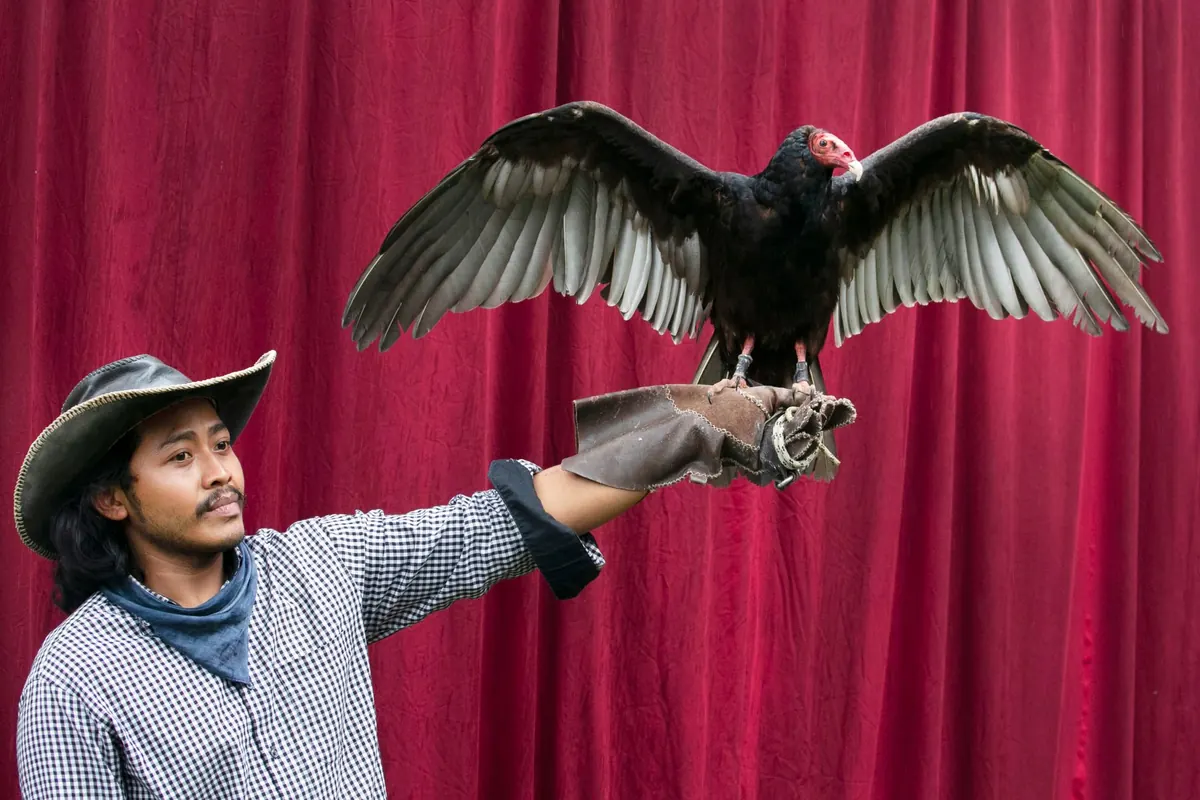
Photo: Willians Huerta / Pexels
Falconry Gift Guide: Presents for the Falconer in Your Life
A practical falconry gift guide: useful presents at every budget, how to judge leather and metalwork, and...

Flying Weight Explained: Reading Your Bird's Condition Safely
How to find and hold a working bird's flying weight, score condition by hand, and build a daily weighing...
About Us